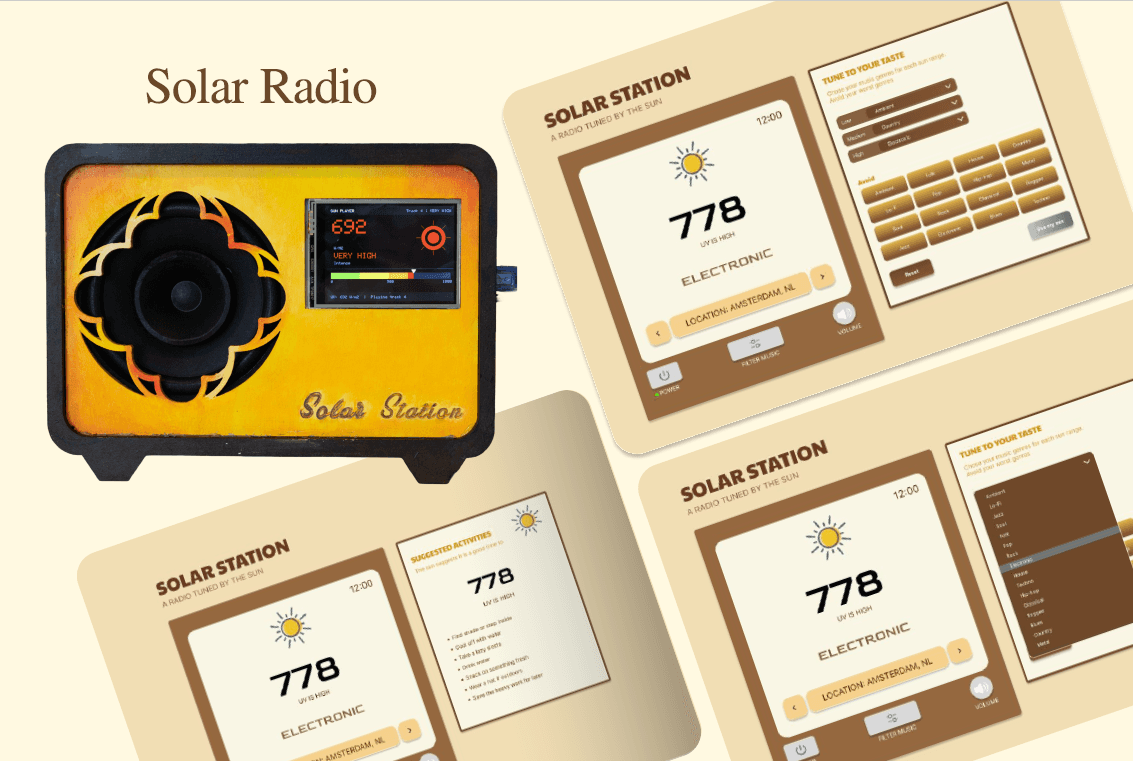
Solar Station
An experimental interaction design project that uses music to create emotional awareness of renewable energy. By connecting live sunlight data to sound, the project encourages users to experience environmental rhythms in a new and meaningful way.
Visual Design

Project Overview
Client: Academic project- Hogeschool van Amsterdam
Industry: Renewable energy, speculative design, sound interaction
Timeline: 12 weeks (2026)
My Role: Researcher, interaction designer, visual designer
The Challenge
Renewable energy systems are deeply dependent on environmental conditions such as sunlight, weather, and seasons. However, most people experience energy only through bills, graphs, and statistics, creating a disconnect between people and the natural systems that generate energy.
Project Goal
Create a sensory experience that strengthens people’s emotional connection to renewable energy and natural rhythms by transforming solar conditions into sound.
Research & Discovery
Understanding Renewable Energy Beyond Data
We began by exploring how people experience renewable energy in everyday life. Research revealed that renewable energy systems are dependent on sunlight, weather, and seasons, yet most people only encounter energy through abstract metrics.
Areas Explored
Renewable energy production and solar dependency · The “Duck Curve” and mismatched energy consumption patterns · People’s disconnection from natural rhythms due to indoor lifestyles · Sensory and speculative design approaches · Existing projects that transformed environmental data into experiences
Key Research Insights
Renewable energy follows nature’s rhythms
Future energy systems may require people to adapt to environmental conditions rather than expecting constant energy availability.
Design Decision
Design an experience that changes with natural conditions instead of presenting energy as a static number.
People are disconnected from sunlight
Modern life is governed by screens, schedules, and artificial lighting, reducing awareness of natural cycles.
Design Decision
Use interaction to reconnect people with sunlight and daily environmental shifts.
Invisible systems become meaningful through experiences
Research into speculative and sensory design showed that sound, light, and atmosphere can communicate complex systems more effectively than numbers alone.
Design Decision
Translate solar energy into an atmospheric and emotional experience.
The Duck Curve highlights a disconnect
Solar energy is produced most when many people are away from home, while demand peaks when sunlight decreases. This revealed an opportunity to reconnect people with renewable energy production patterns.
Design Decision
Make production patterns easier to notice through an experience that responds to changing sunlight.
How might we create a sensory experience that strengthens people’s emotional connection to renewable energy and natural rhythms?
Creative Session Outcomes
During ideation, we explored multiple directions for making solar energy visible and tangible.
Technique
01
Auditory Concepts
Key takeaway
Solar-powered radio, music influenced by sunlight intensity, and sound as an emotional representation of energy created the strongest engagement.
Impact on final concept
Sound became the leading direction because it could make solar energy present without demanding constant visual attention.
Technique
02
Visual Concepts
Key takeaway
Dynamic solar paintings, matrix-board artwork, Energy Ghost projections, and light installations helped explore how solar energy could become visible.
Impact on final concept
These concepts revealed that visual experiences could be compelling, but many required constant attention or perfect environmental conditions.
Technique
03
Main Learnings
Key takeaway
Sound created stronger emotional engagement, experiences felt more meaningful than data visualizations, and storytelling made energy more relatable.
Impact on final concept
The project shifted toward ambient interaction and emotional storytelling rather than direct data display.
Technique
04
Ambient Interaction
Key takeaway
Ambient interactions required less attention than visual installations and could exist naturally in the background.
Impact on final concept
This supported the final decision to create a solar-powered radio experience.
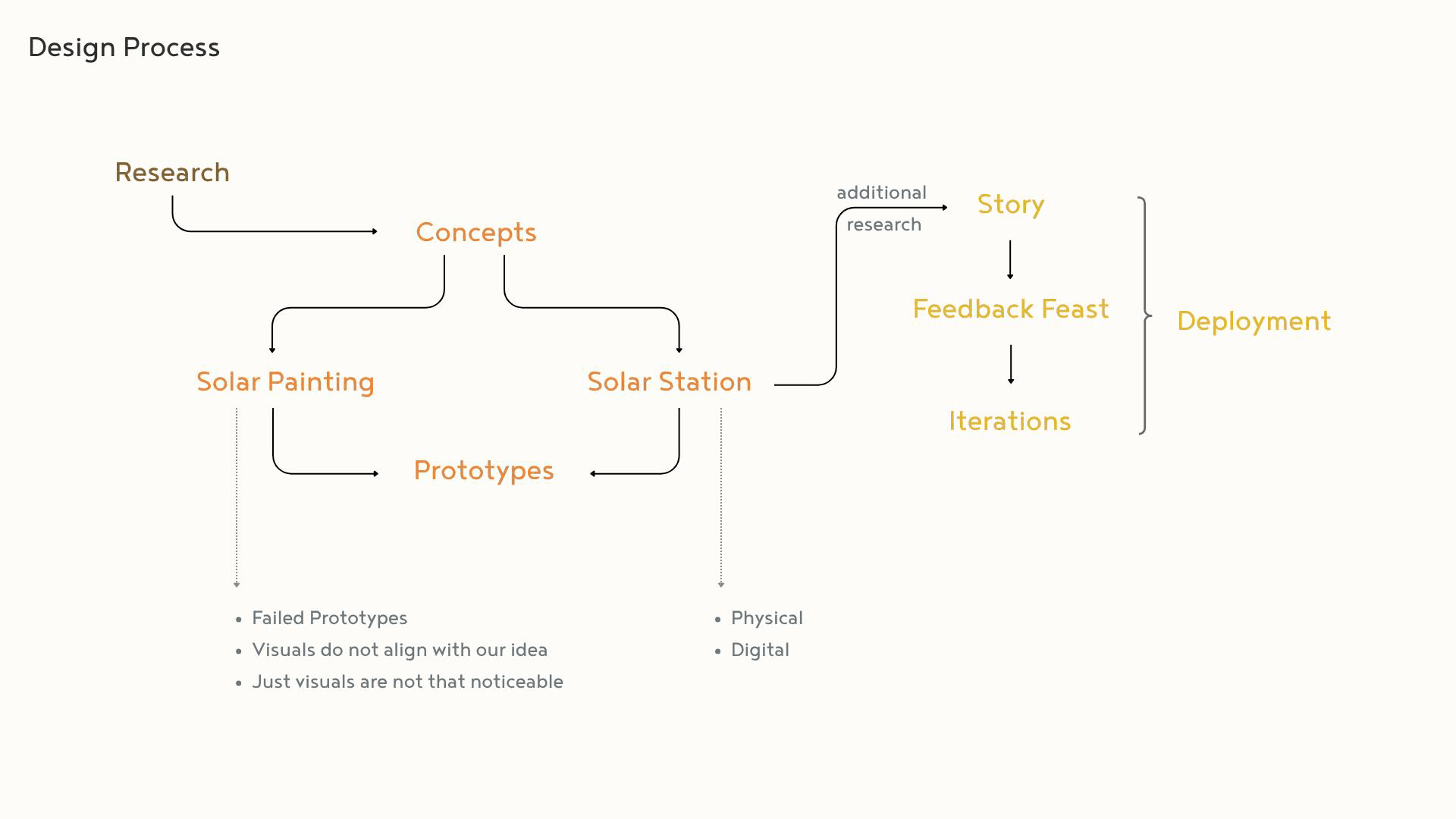
Prototypes
The final concept evolved through five prototype iterations, moving from visual explorations toward a physical and digital radio experience.
02
Pixel Screen Prototype
Goal: Visualize solar energy through changing digital patterns. Learning: Playful, but lacked emotional depth and resembled a screen rather than an artwork.


03
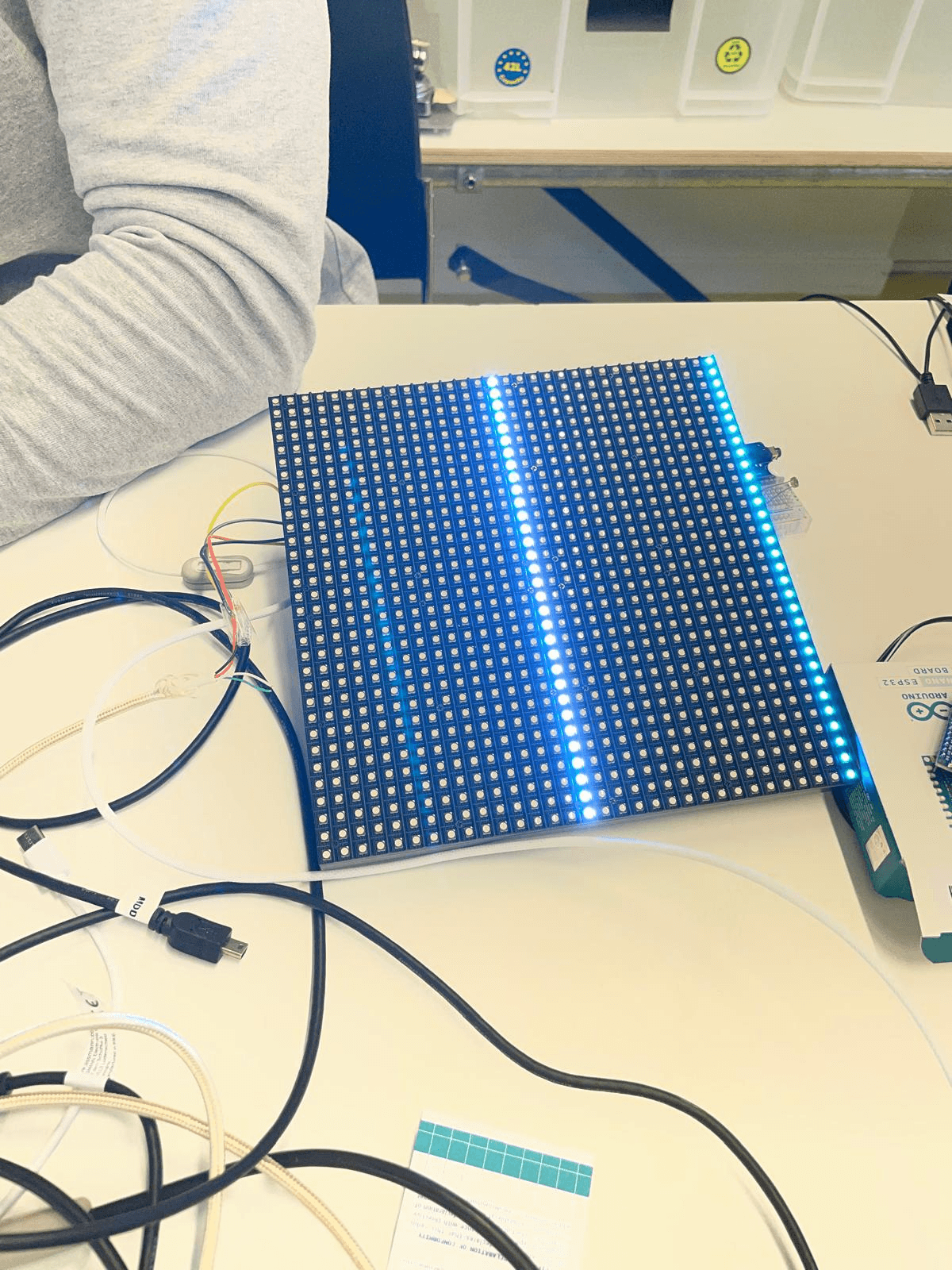
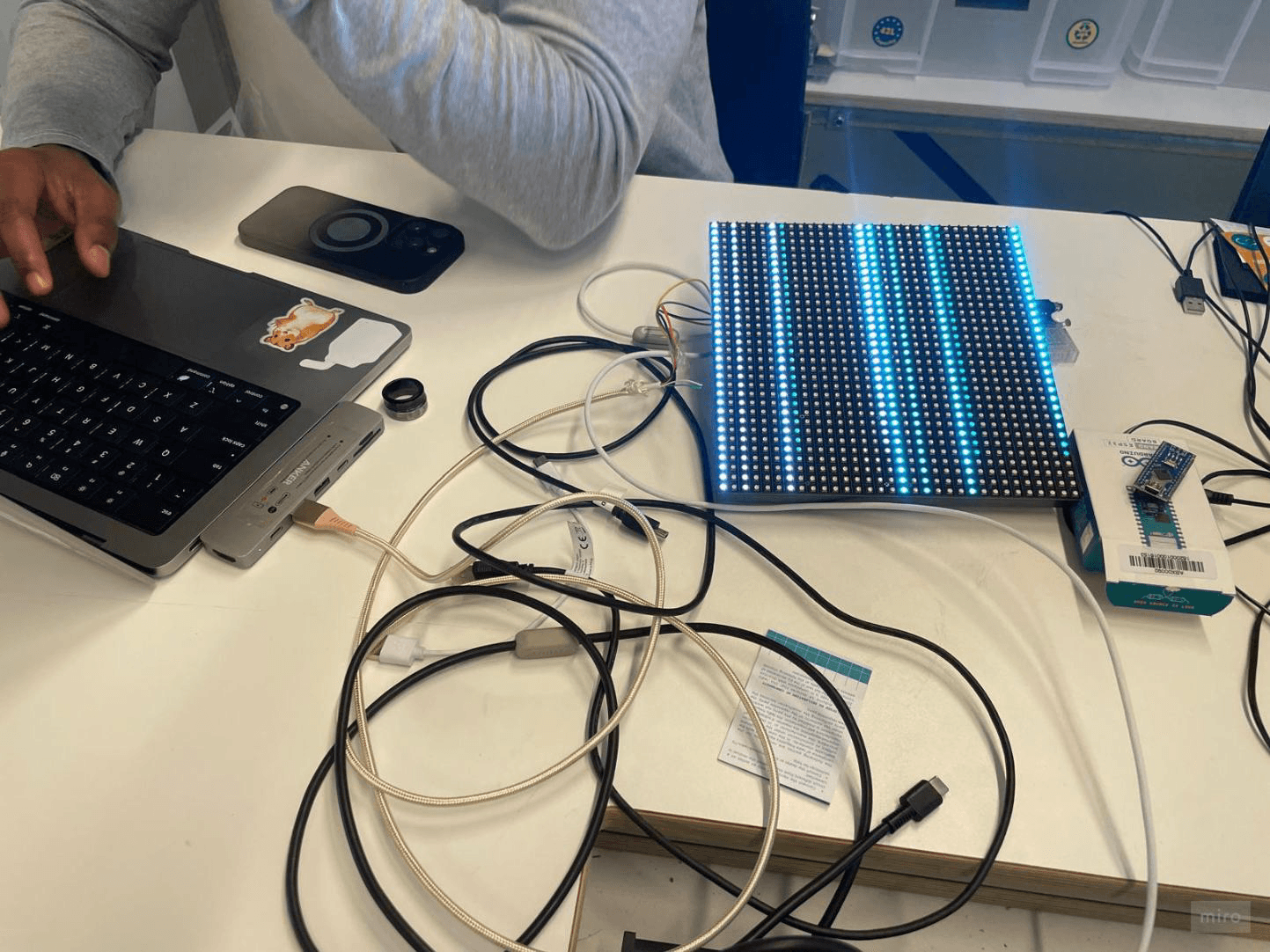
Matrix Board Installation
Goal: Create atmospheric solar-driven light art. Learning: Stronger emotional quality, but technical limitations and user attention requirements remained.


04
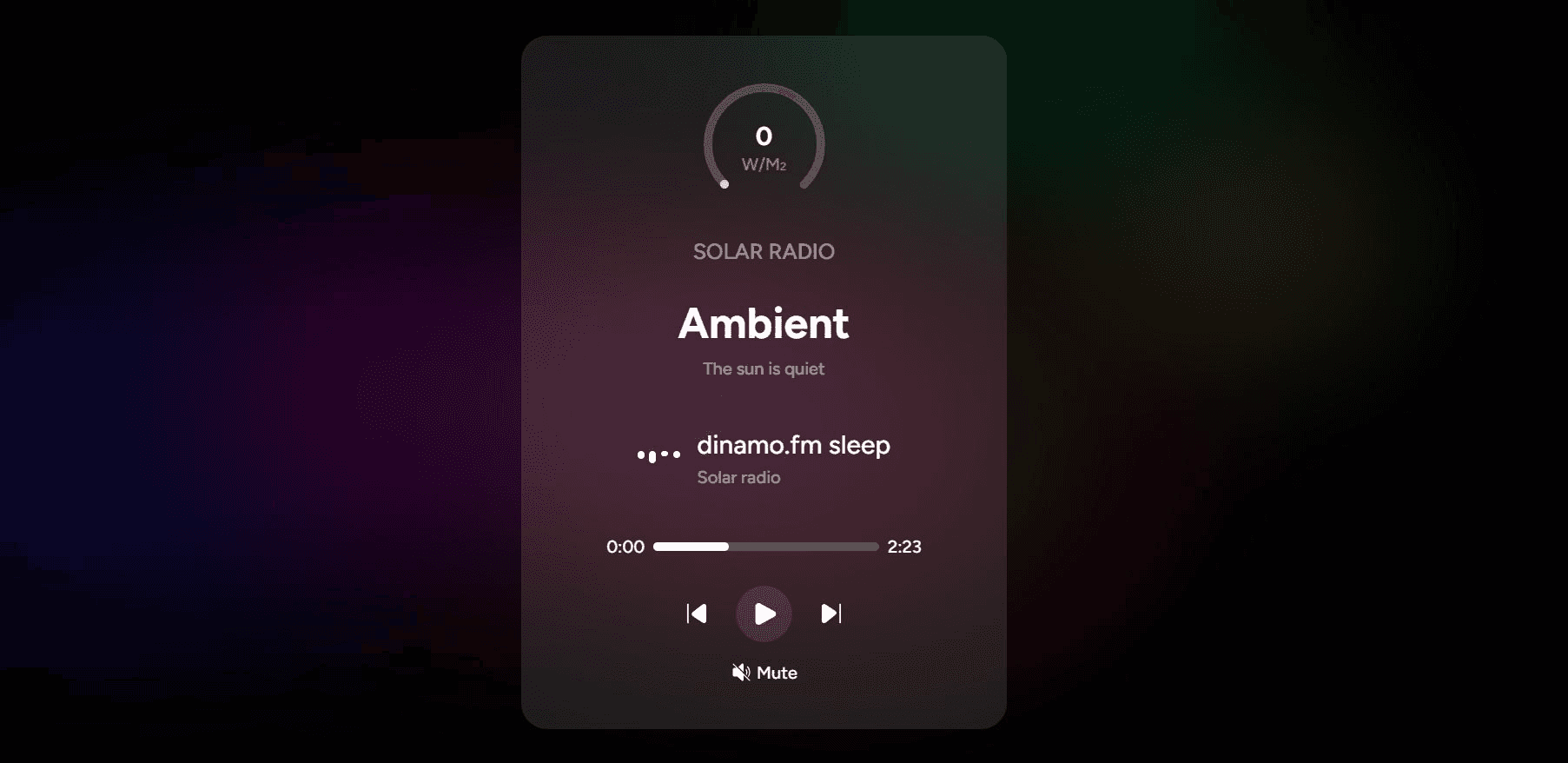
First Digital Radio
Goal: Translate sunlight into music genres using live weather data. Learning: Participants immediately understood the connection between sunlight and music.


05
Physical Solar Station
Goal: Create a tangible artifact that embodied renewable energy through sound. Outcome: The final integrated physical and digital experience.


Design direction
“Energy should be experienced, not just measured.” Solar Station shifted away from displaying solar energy as information and focused on helping people feel environmental conditions through music.
Design Requirements
01
Make Energy Sensory
Translate solar input into music and atmosphere so people can feel energy instead of only reading about it.
02
Respond to Nature
Let sunlight and environmental conditions shape the experience in real time.
03
Create Emotional Relationships
Use music and storytelling to make renewable energy feel relatable and personal.
04
Stay Ambient
Create an experience that can exist naturally in the background without requiring constant attention.
Concept Selection
Why We Moved Away From Visual Concepts
Testing revealed that visual experiences required constant attention, depended on perfect environmental conditions, and could be easy to miss. Some visual directions also felt too technological rather than emotional.
Why Solar Station Was Chosen
Music could exist naturally in the background, created emotional engagement, and allowed users to experience solar energy without actively looking. This led us to select Solar Station: a solar-powered radio that translates sunlight into music experiences.
Solar Station Physical and Digital Prototypes
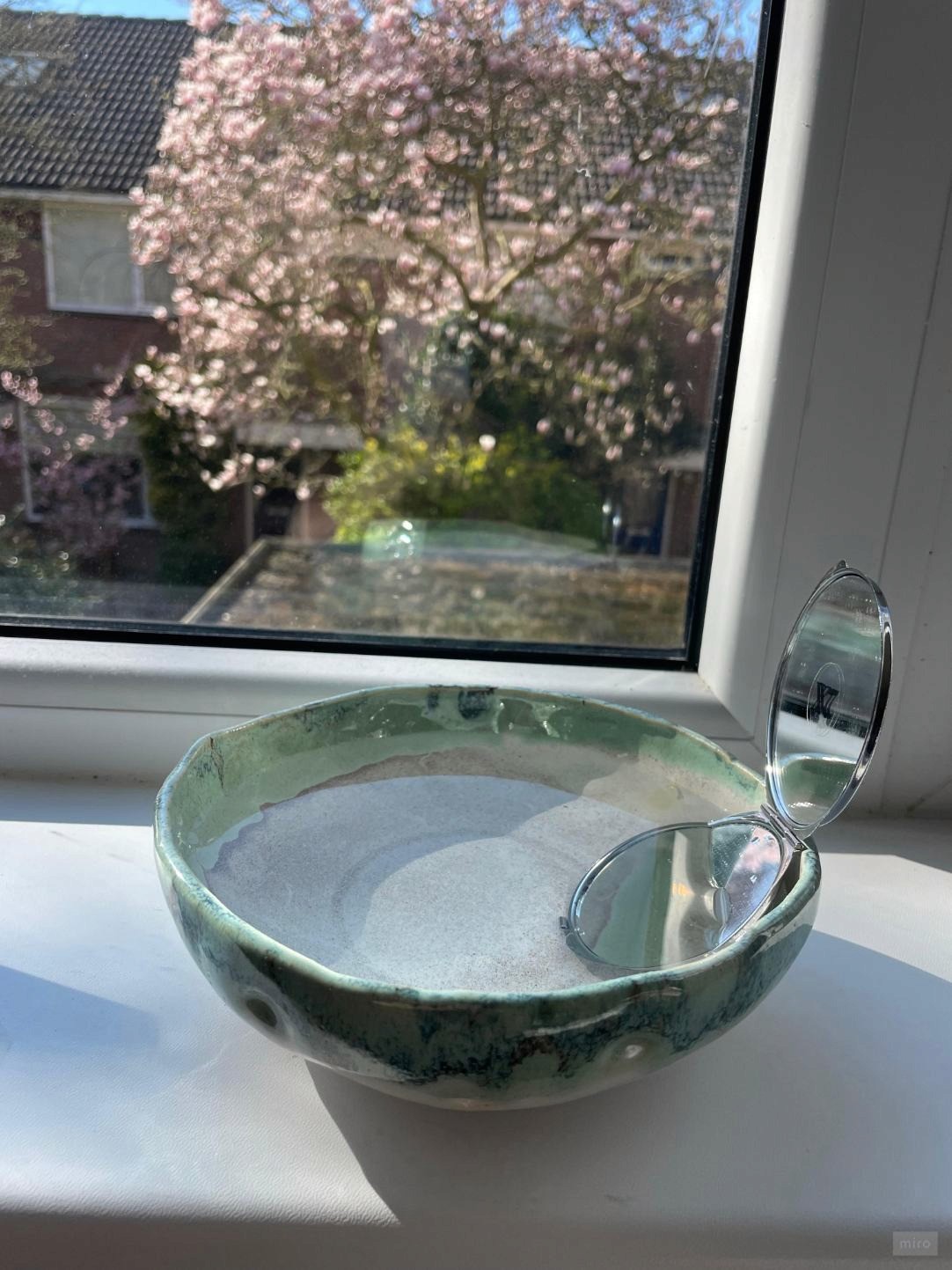
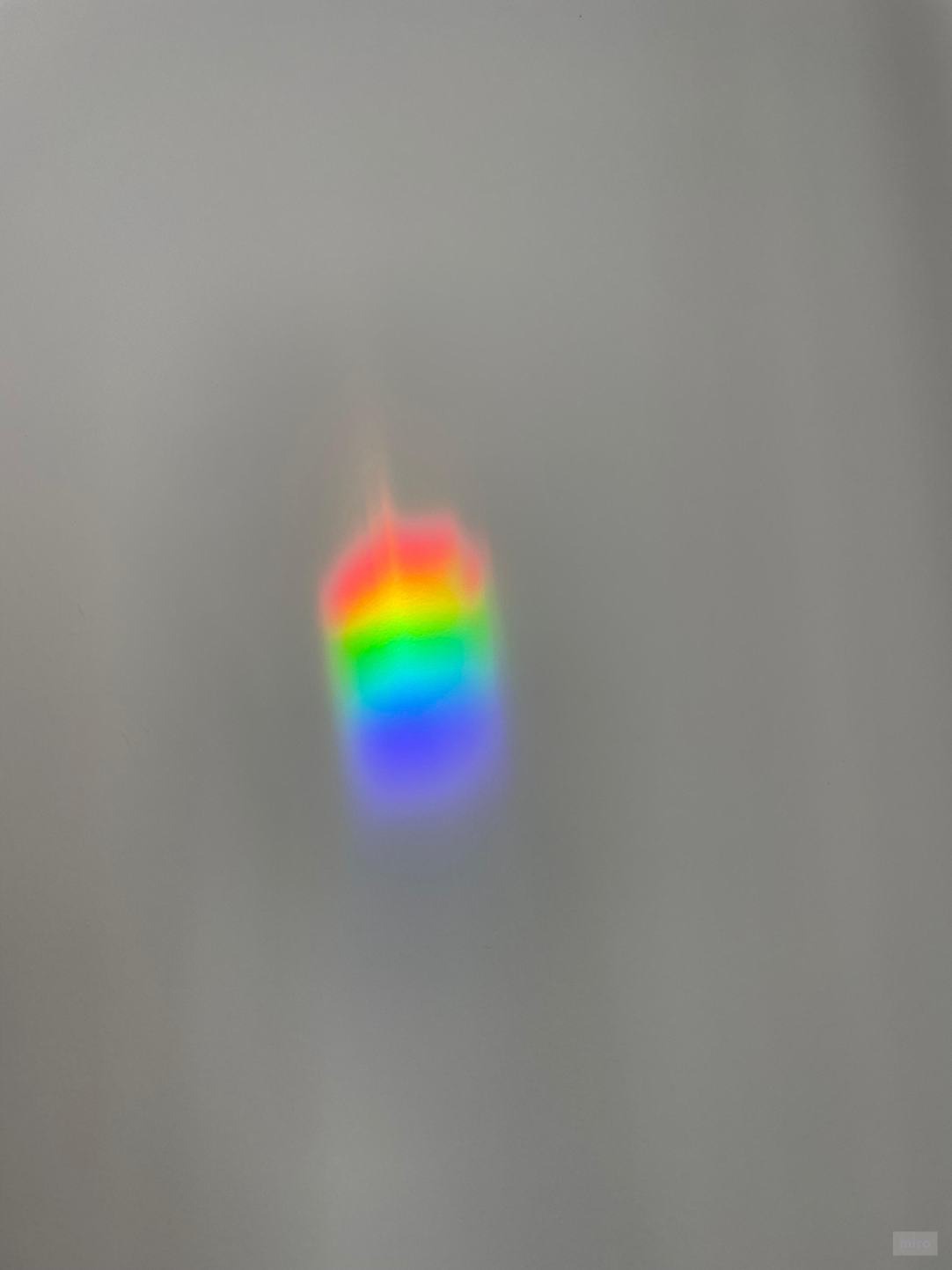
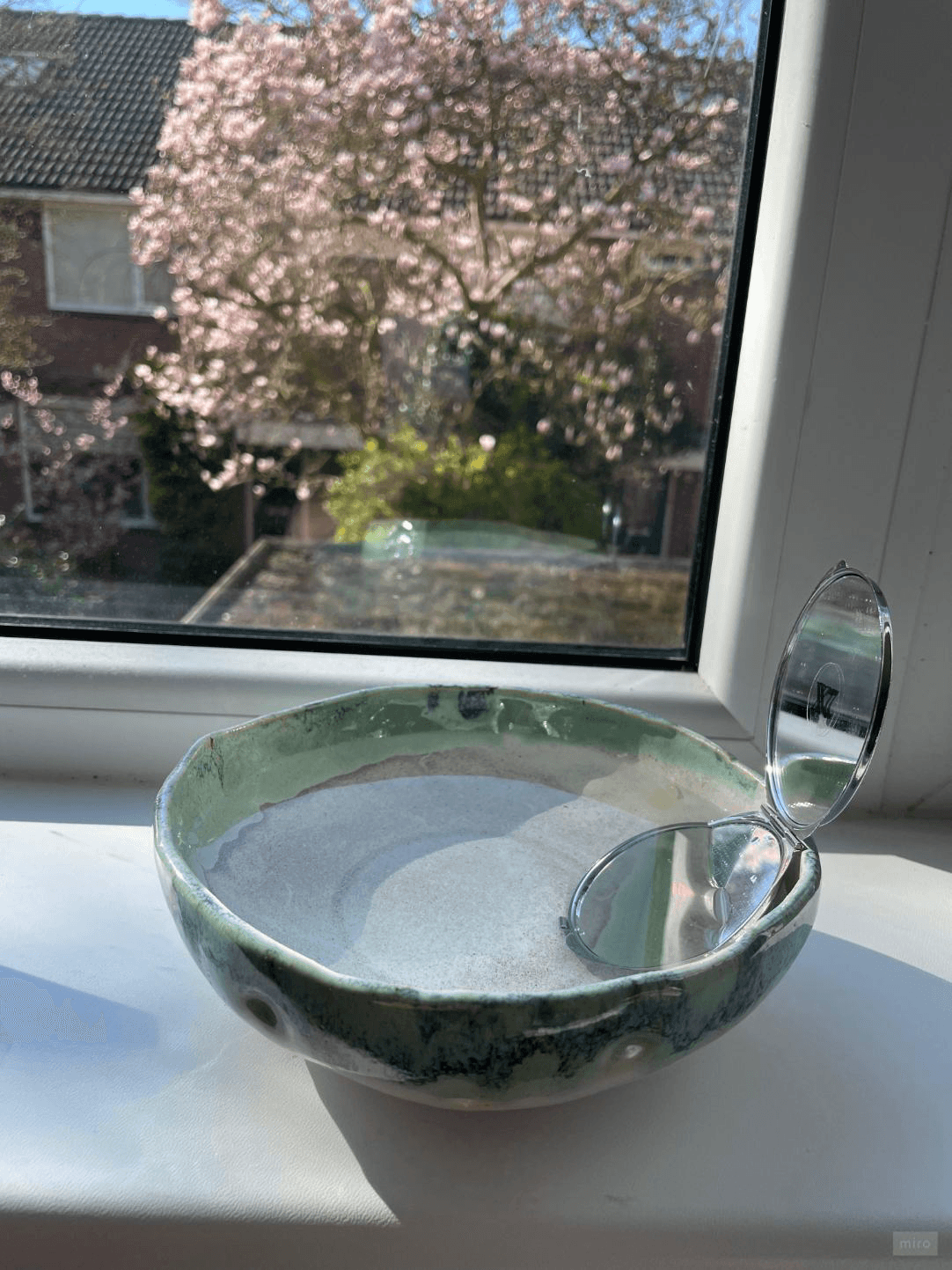
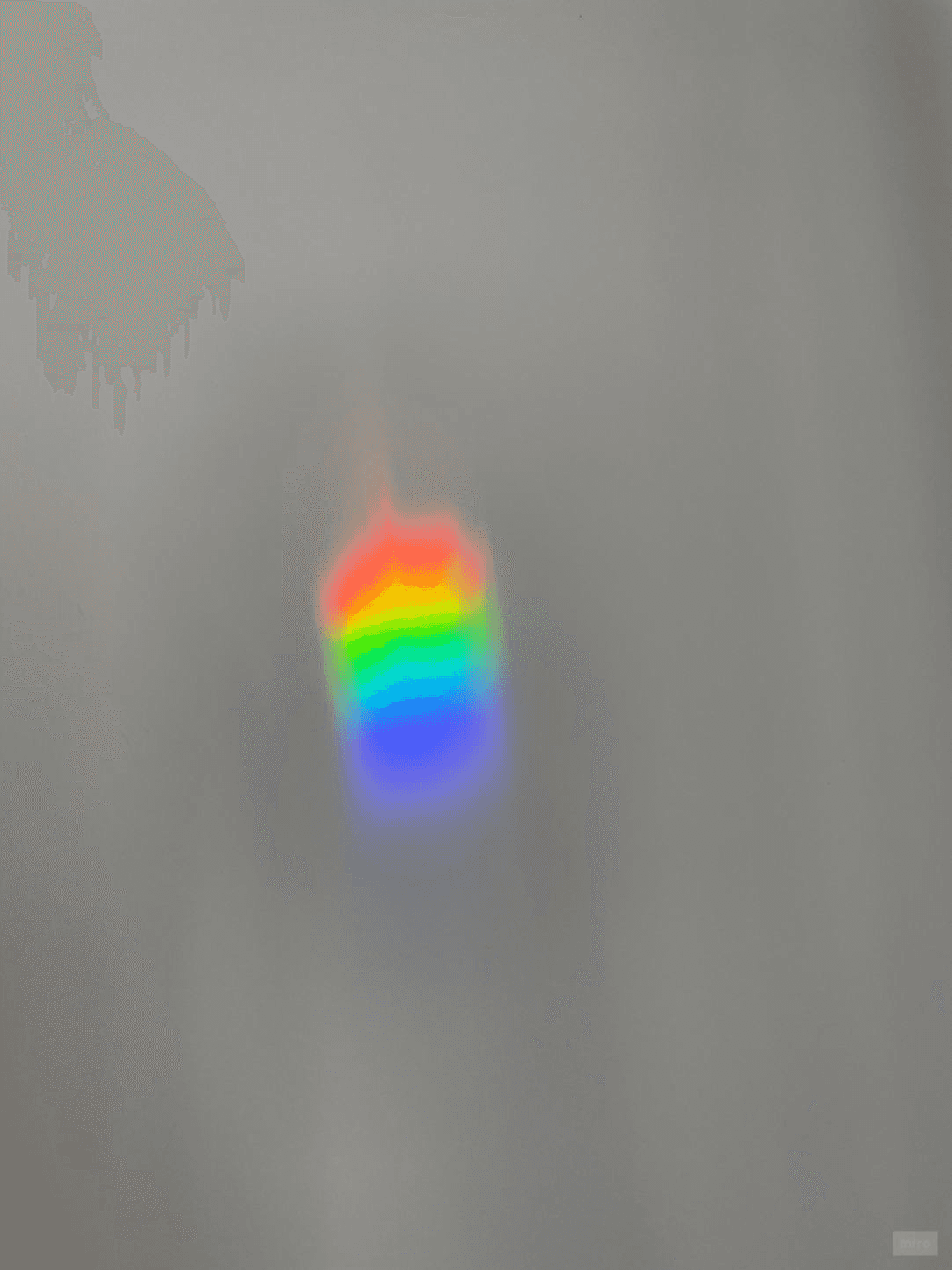
Rainbow Prototype
Low-fi exploration of creating artwork directly from sunlight.
Matrix Board Installation
Low-fi installation direction exploring atmospheric solar-driven light art.
First Digital Radio
High-fi digital prototype translating sunlight and weather data into music experiences.
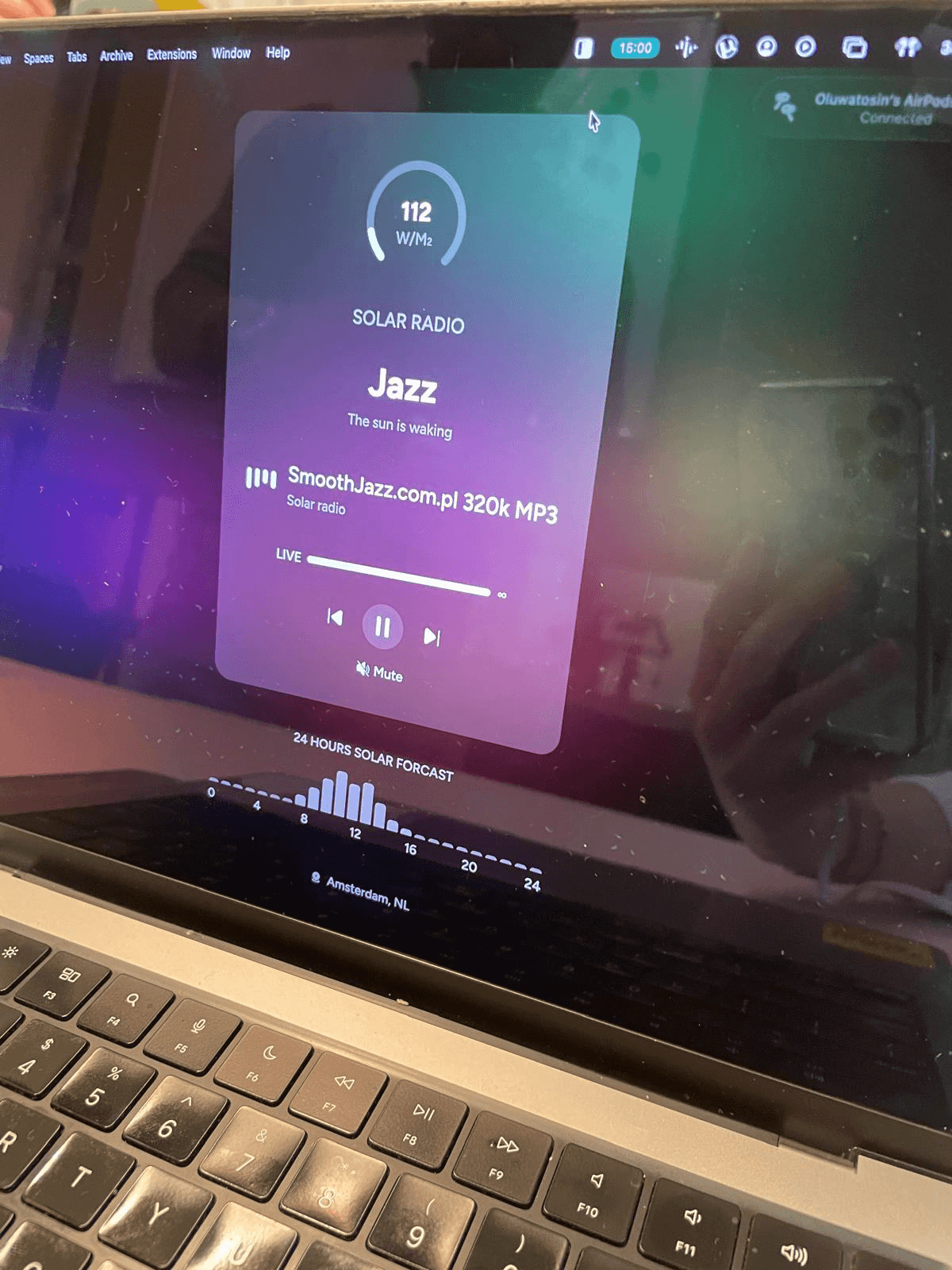
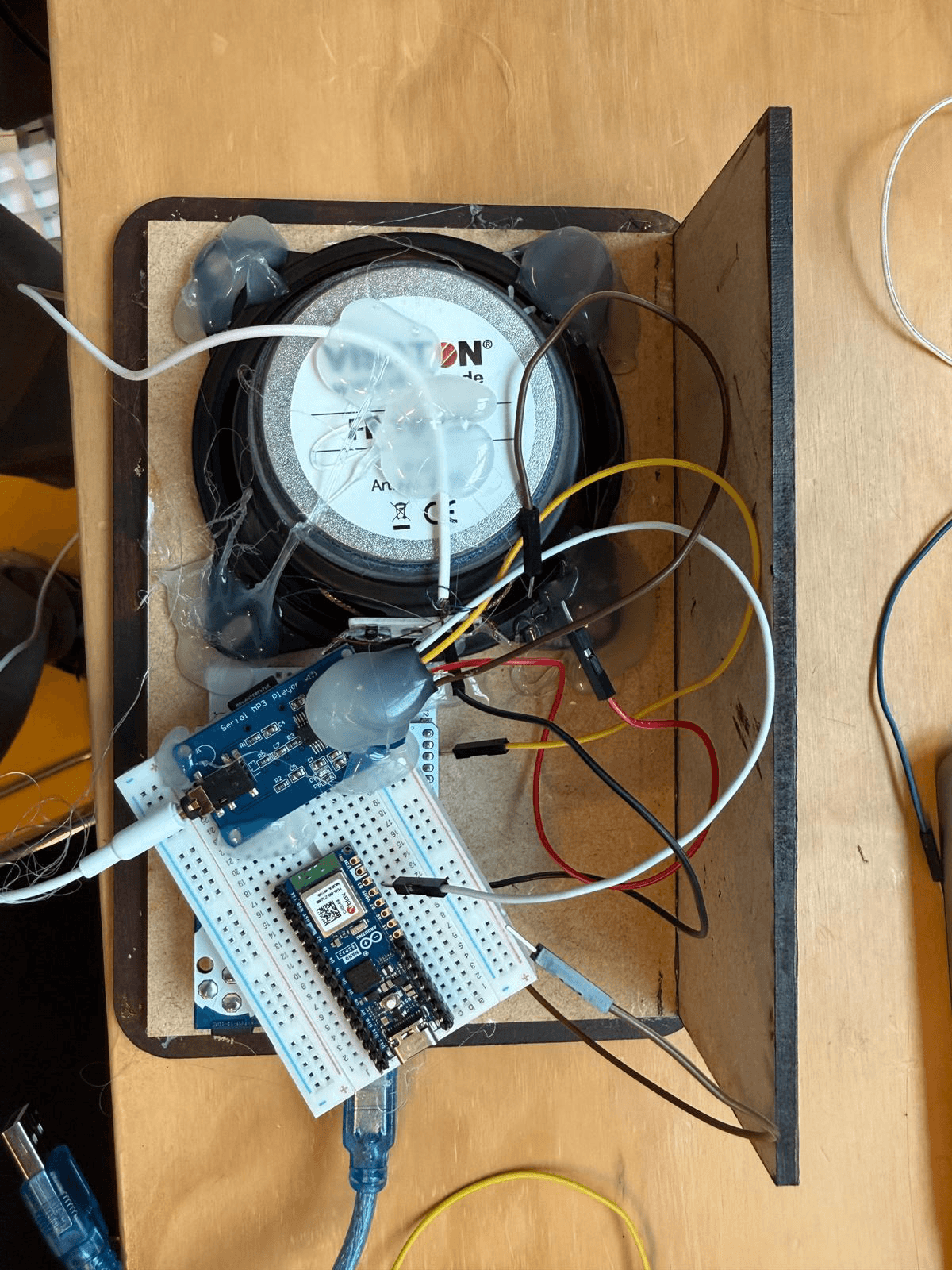
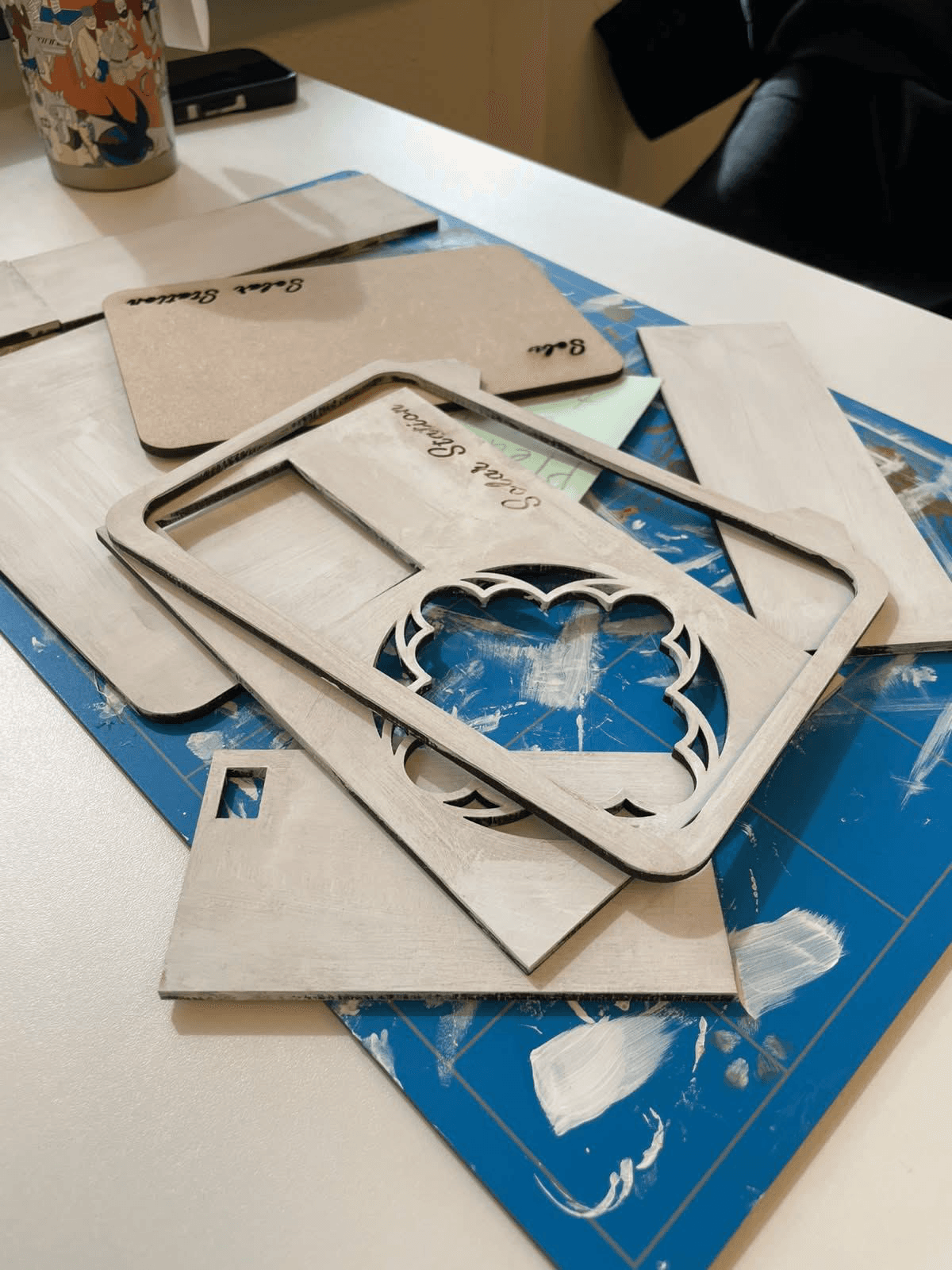
Physical Solar Station
High-fi physical prototype that turns the solar-radio concept into a tangible listening artifact.


City Exploration
Users could explore different cities and hear how environmental conditions changed the listening experience.

Physical Solar Station
A tangible radio artifact that embodied renewable energy through sound.
Deployment
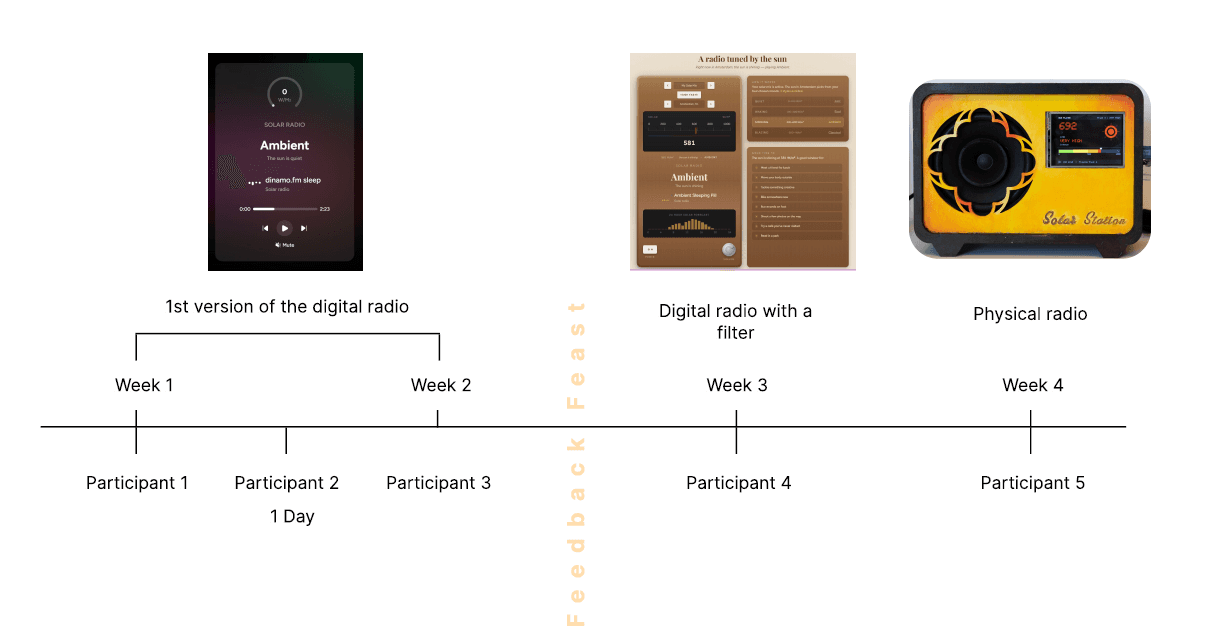
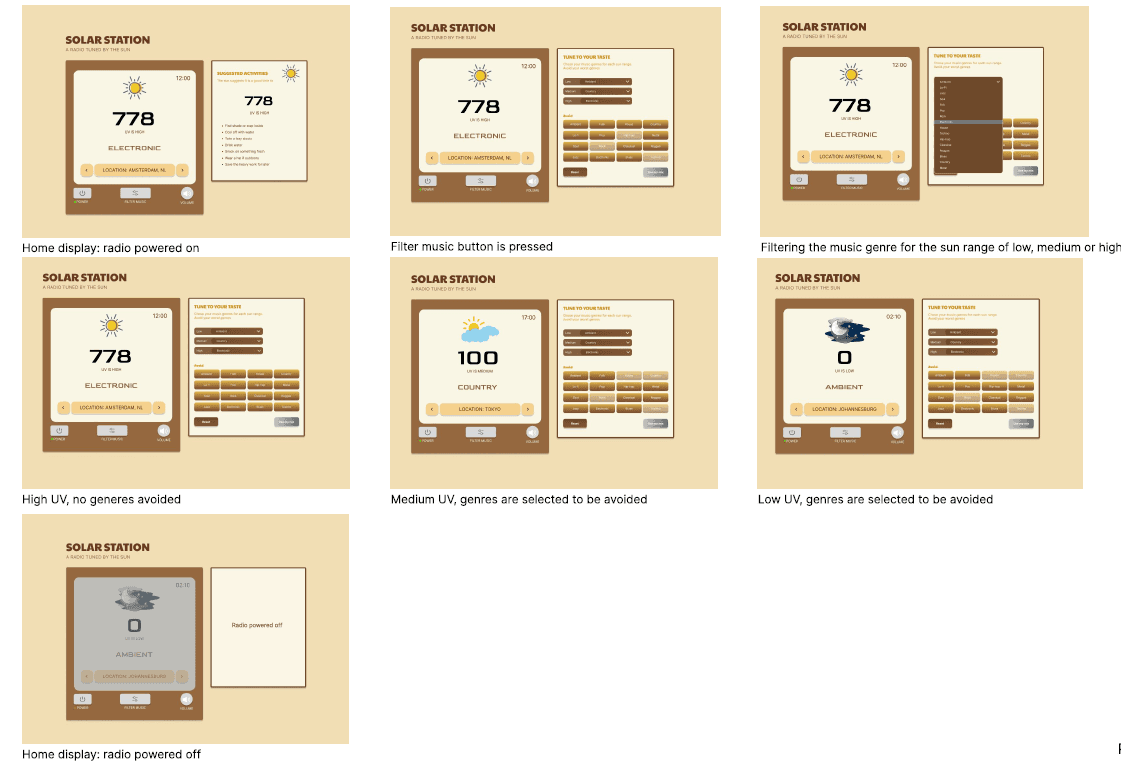
Participants used a digital version of Solar Station before the physical prototype was finalized. The test focused on whether users understood the connection between UV levels, sunlight, and music.
Feedback
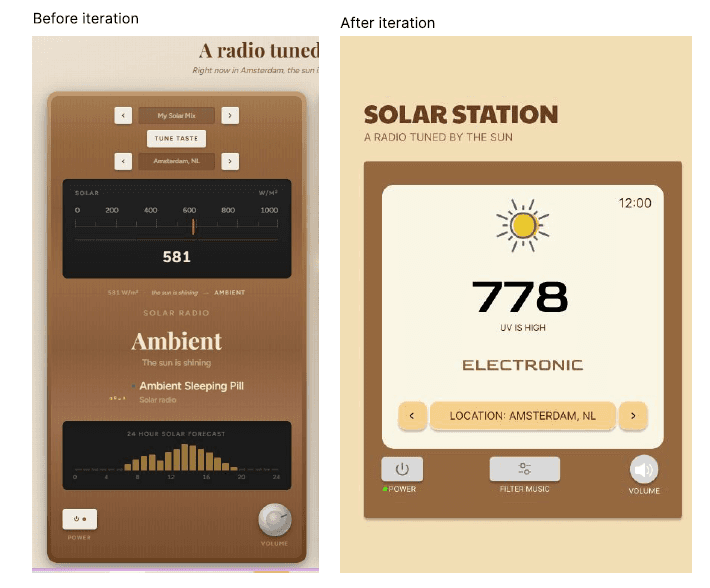
Users enjoyed exploring different cities and noticed relationships between UV levels and music.
Design change
Kept location exploration as part of the experience and made environmental context more visible.
Feedback
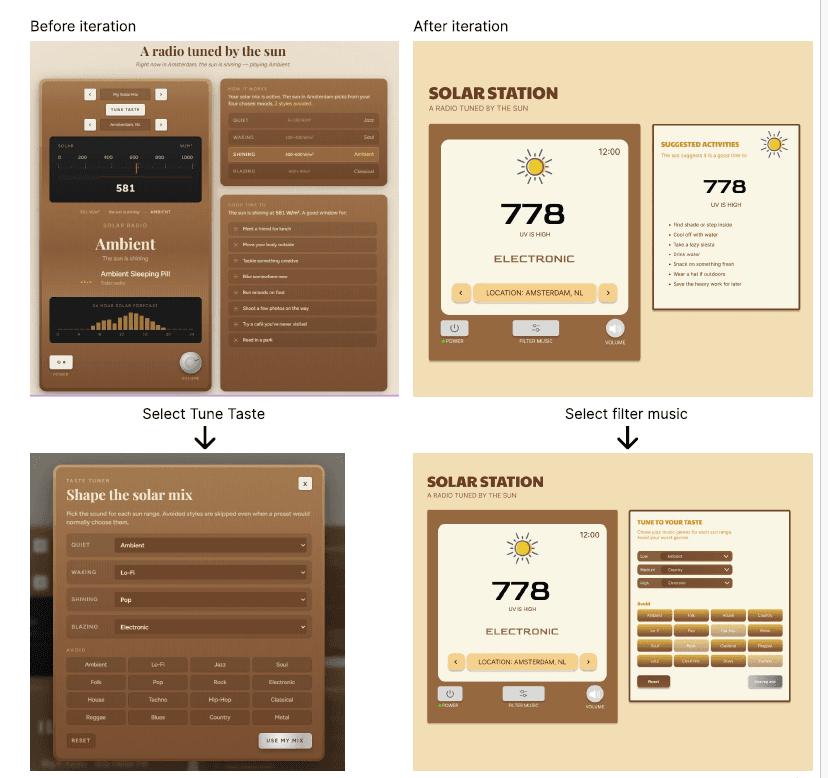
Users disliked being restricted to certain genres and wanted more personalization.
Design change
Identified the need for more user control while preserving the solar-driven concept.
Feedback
“That’s when you realize that the UV number is behind the genre of the music.”
Design change
Confirmed that users were beginning to notice the connection between renewable energy and the listening experience.
Testing & Iterations
Final Solar Station
Solar Station: A Radio Tuned by the Sun
Solar Station is a physical and digital radio that transforms live solar conditions into musical experiences. Instead of displaying solar energy through graphs or statistics, the system uses sunlight intensity and environmental data to influence the music users hear. As sunlight changes, the atmosphere, mood, and energy of the music changes with it.

City Exploration
Users could explore different cities and hear how environmental conditions changed the listening experience.
Physical Solar Station
A tangible radio artifact that embodied renewable energy through sound.
Impact
User Impact
✓ Increased awareness of environmental conditions
✓ Created a more emotional relationship with renewable energy
✓ Encouraged reflection on natural rhythms and sustainability
✓ Turned invisible energy systems into everyday experiences
For Me as a Designer
This project strengthened my interest in experience design, storytelling, speculative design, and emotional interaction design. It also taught me the importance of balancing creativity with research, testing, and real-world validation to create meaningful experiences.
Reflection
Solar Station helped me understand how interaction design can make invisible systems feel personal. By translating environmental data into sound, the project moved beyond explanation and created a more emotional relationship with renewable energy.