ARC
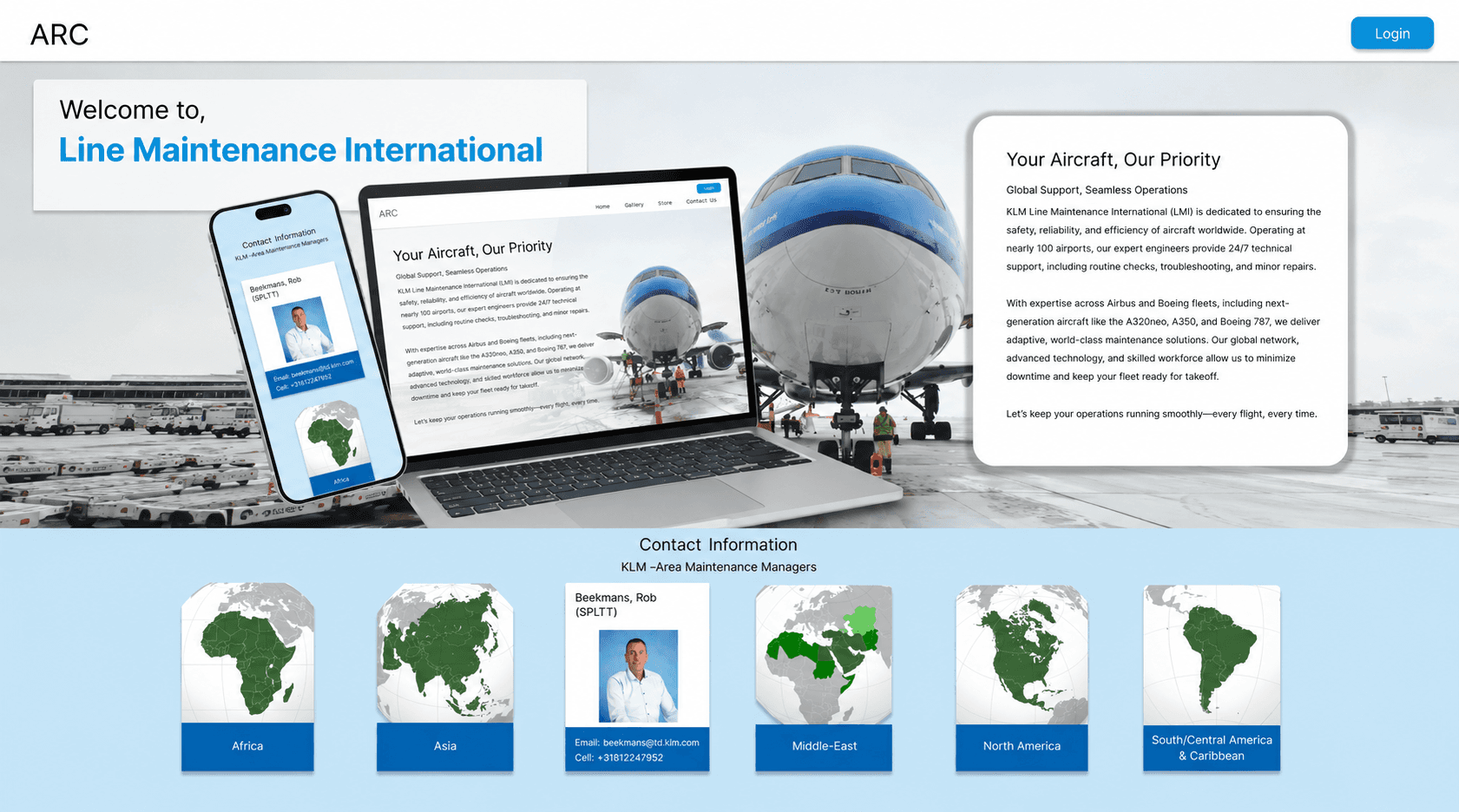
KLM's maintenance division lacked a dedicated platform for airline customers. A customer portal was designed to provide self-service access to important information while reducing the workload of internal teams.
Product Design

Project Overview
Client: KLM, Line Maintenance Engineering (LMI)
Industry: Aviation Industry
Timeline: 17 weeks (2025)
My Role: UX Designer & Researcher
The Challenge
LMI lacked a dedicated digital platform for contracted airline customers. As a result, customers had to rely on Area Maintenance Managers (AMMs) for access to contracts, invoices, station capabilities, and service updates. This fragmented communication process created inefficiencies, delays, and a lack of transparency for both customers and employees.
Project Goal
To improve communication between KLM Line Maintenance International and its contracted airline customers by designing a centralized customer portal that increases transparency, reduces repetitive communication, and streamlines workflows.
Discovery & Research
A combination of interviews, workshops, journey mapping, and desk research was used to understand the communication ecosystem, stakeholder needs, and current workflows within KLM Line Maintenance International.
Research Activity | Key Discovery | Design Impact |
|---|---|---|
Focus Groups | Revealed that Area Maintenance Managers (AMMs) are the primary link between airline customers and KLM’s internal teams. | The project focus shifted from customers to AMMs, as improving their workflow would indirectly improve the customer experience. |
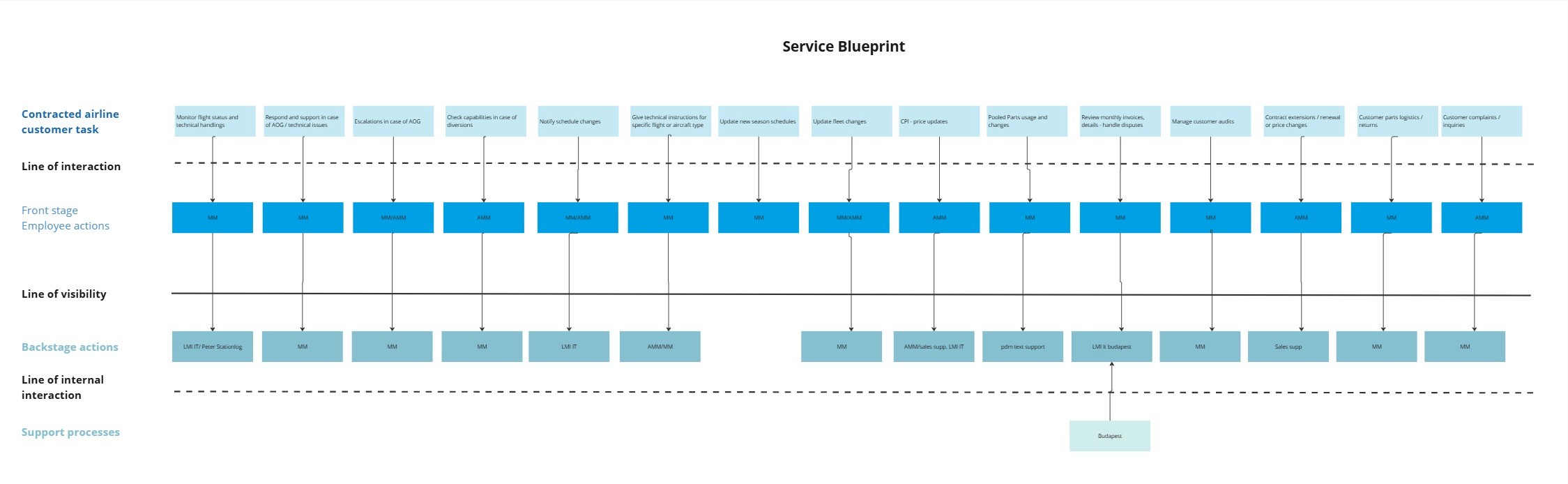
Service Blueprinting | Exposed communication bottlenecks and dependencies across departments, with information passing through multiple teams before reaching customers. | Highlighted the need for a centralized platform that reduces reliance on manual communication. |
Research Activity | Key Discovery | Design Impact |
|---|---|---|
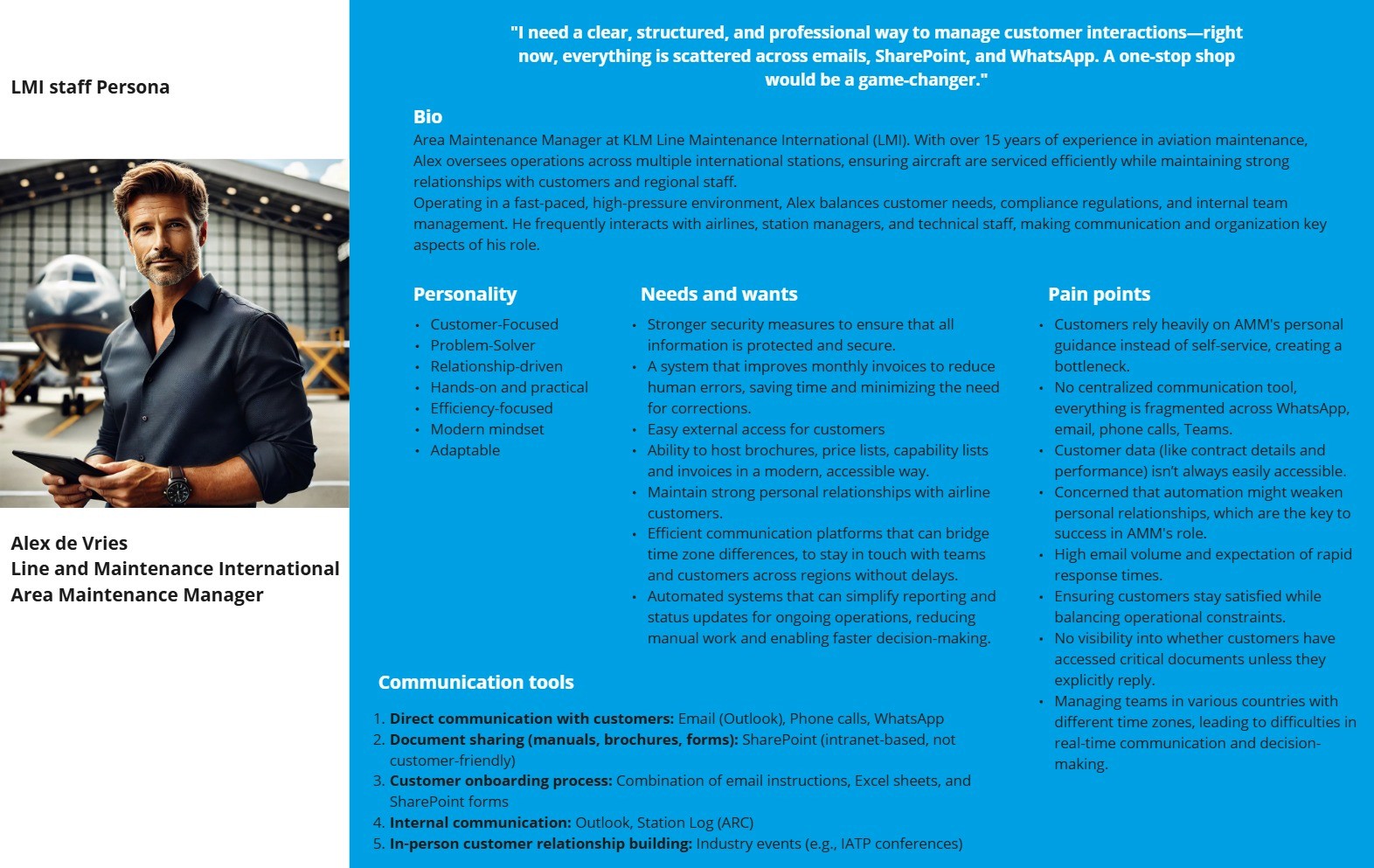
Interviews with AMMs | Uncovered that AMMs spent significant time responding to repetitive requests, sharing documents, and managing communication across disconnected systems. | Led to the prioritization of self-service features and centralized information access. |
Research Activity | Key Discovery | Design Impact |
|---|---|---|
Director Interview | Revealed that maintaining strong customer relationships was just as important as improving operational efficiency. | Ensured the solution supported human interaction rather than replacing it entirely. |
Empathy Mapping | Showed that AMMs lacked visibility into customer interactions and felt overwhelmed by fragmented communication channels. | Informed features focused on transparency, communication history, and document accessibility. |

Research Activity | Key Discovery | Design Impact |
|---|---|---|
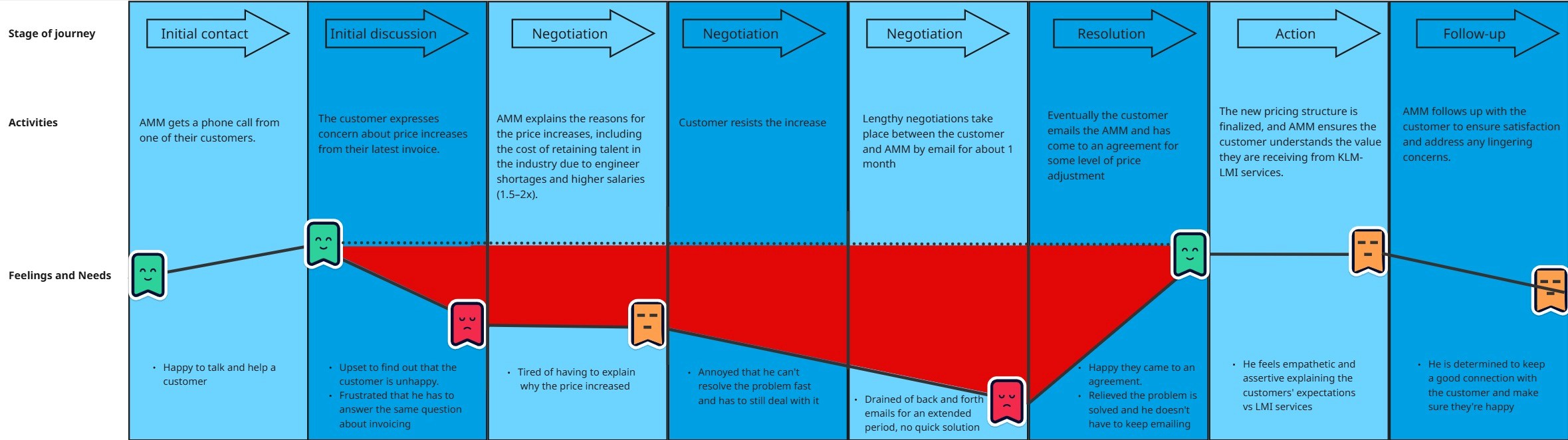
User Journey Mapping | Identified delays and frustration caused by long email chains and inefficient information sharing. | Created opportunities for customers to independently access information and updates.. |
Research Activity | Key Discovery | Design Impact |
|---|---|---|
Competitor Analysis | Found that successful B2B platforms provide centralized information, transparency, and self-service capabilities.. | Validated the portal concept and helped define core features. |
Key Research Insights
Communication was fragmented across multiple platforms
Design Decision
I designed a centralized customer portal that brings contracts, invoices, contacts, service updates, and operational information together in one place, reducing the need to switch between multiple systems.
AMMs were the central point of contact for customers
Design Decision
I introduced self-service features that allow customers to access information independently, reducing repetitive inquiries and freeing up AMMs to focus on higher-value interactions.
Customers needed greater transparency
Design Decision
I designed dashboards and information pages that provide customers with direct access to essential information and real-time updates, increasing transparency and reducing communication delays.
Limited visibility led to invoicing disputes and confusion
Design Decision
I created dedicated invoice management and tracking features that give both AMMs and customers greater visibility into invoices, payment status, and dispute resolution processes.
Human relationships remained essential
Design Decision
Rather than replacing human interaction, the portal was designed to support it by streamlining administrative tasks and creating more time for meaningful customer conversations.
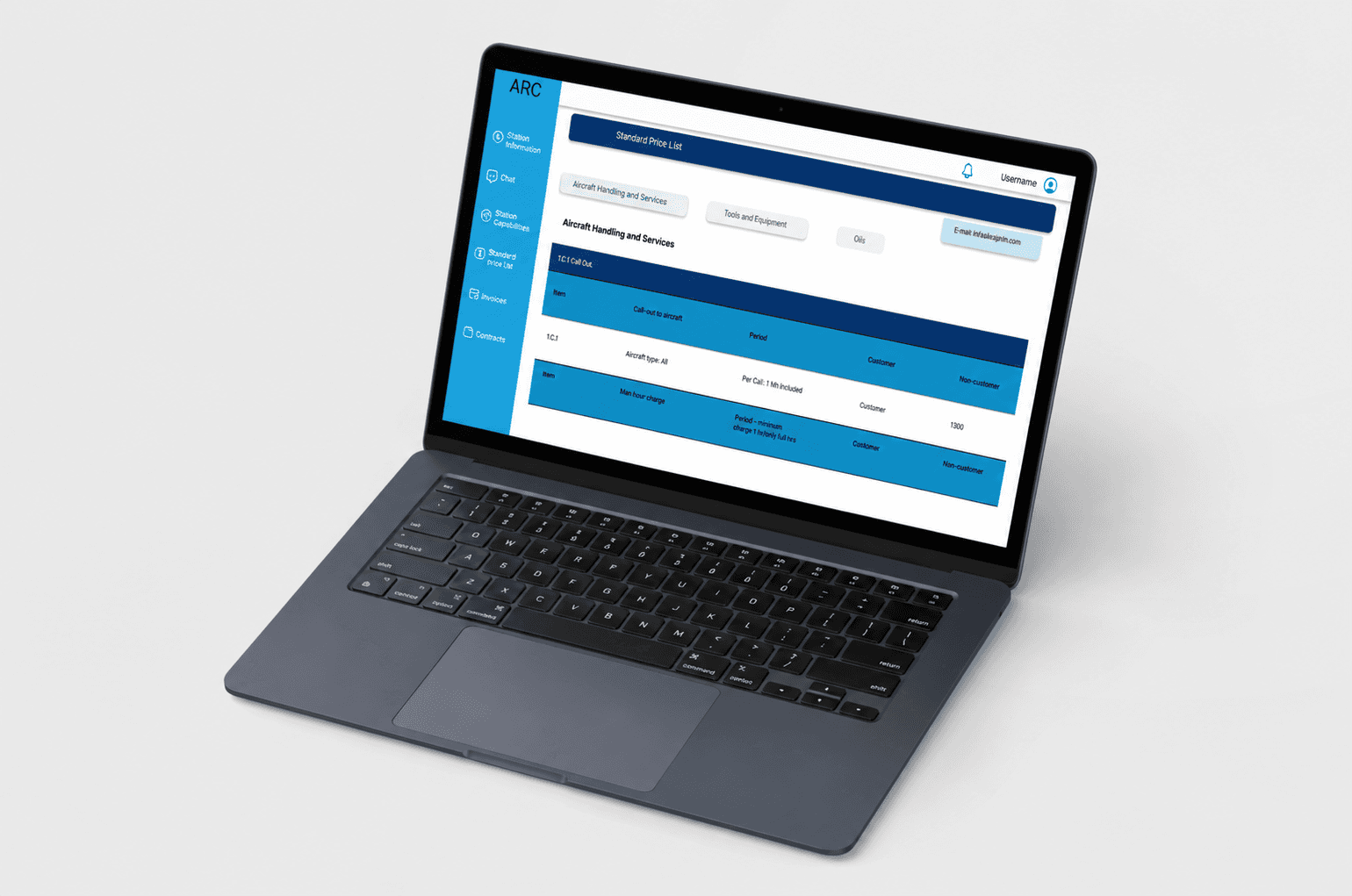
How might we create a centralized communication platform that improves transparency, reduces repetitive communication, and gives customers easier access to essential information?
Creative Session Outcomes
Technique
01
Crazy 8s
Key takeaway
Generated multiple ways for customers to access information independently.
Impact on final concept
Reinforced the idea of a self-service customer portal.
Technique
02
6-3-5 Brainwriting
Key takeaway
Participants repeatedly suggested a central location for contracts, invoices, capabilities, and updates.
Impact on final concept
Led to the development of a dashboard acting as a single source of truth.
Technique
03
Negative Brainstorming
Key takeaway
Highlighted frustrations caused by hidden information, excessive emailing, and unclear ownership.
Impact on final concept
Inspired features focused on transparency and information accessibility.
Technique
04
Stakeholder Discussions
Key takeaway
Revealed concerns that automation could reduce personal customer relationships.
Impact on final concept
Ensured direct AMM contact details remained visible throughout the platform.
What emerged
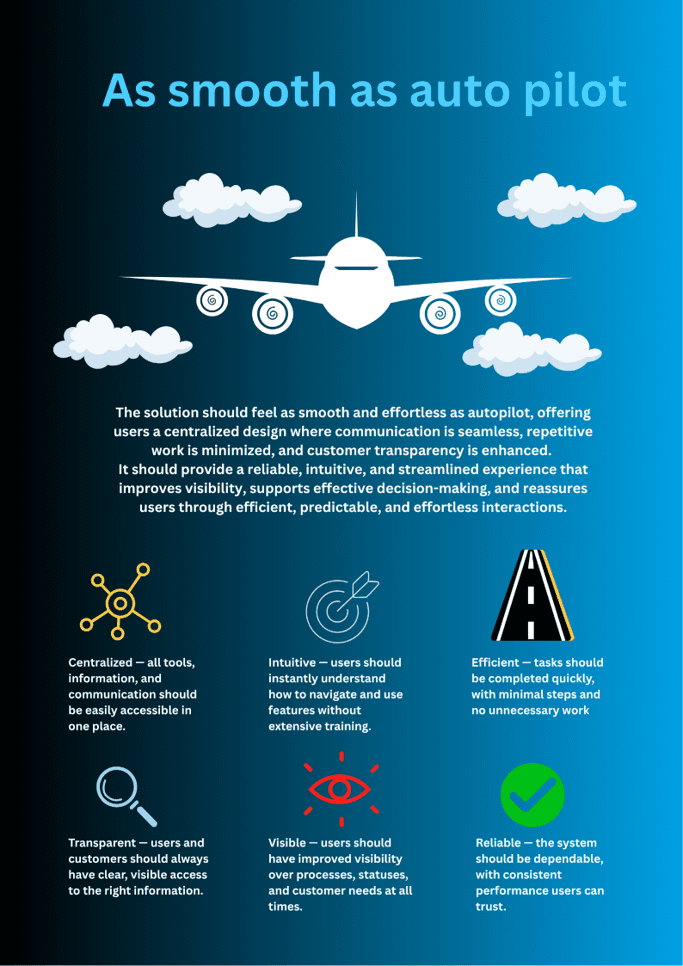
Together with AMMs, IT, Engineering, and Sales stakeholders, the strongest opportunities centered on self-service, data consistency, streamlined communication, and human support.
Concept Selection
Several concepts emerged during ideation, including automated communication tools, chat-based support, and document repositories. The customer portal was selected because it addressed the largest number of user needs while aligning with business goals.
Why a Customer Portal?
User Need | Portal Solution |
|---|---|
Access information quickly | Self-service dashboard |
Reduce repetitive requests | Centralized resources |
Increase transparency | Invoice and contract visibility |
Maintain relationships | Regional AMM contact hub |
Request maintenance support | Quote request feature |
From Idea to Features
The final concept was built around three core opportunities identified during ideation. Each feature card leaves space to show the low-fi structure next to the high-fi interface.
01
Customer Contact Hub
Provides direct access to regional Area Maintenance Managers while maintaining personal relationships.


02
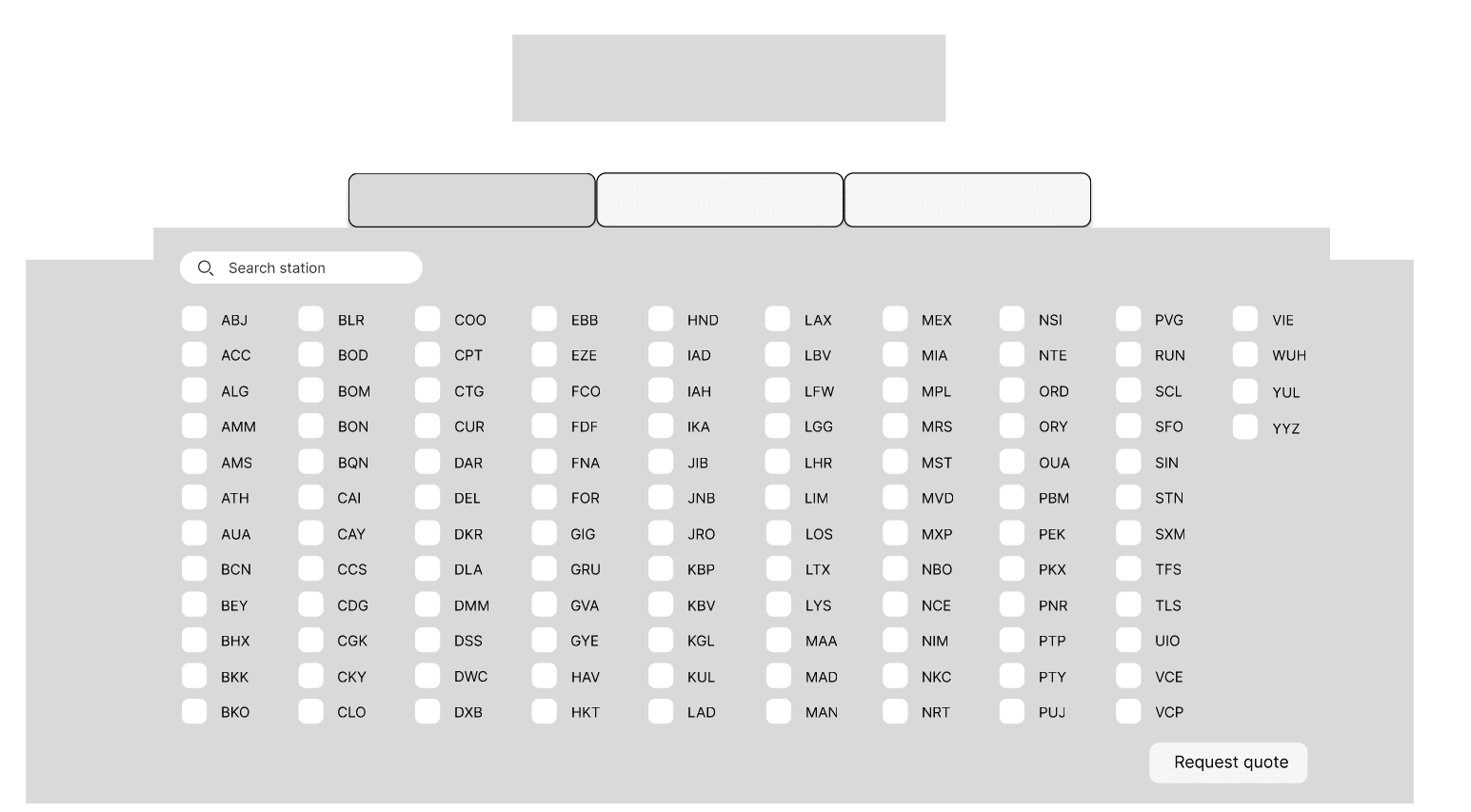
Quote Request Tool
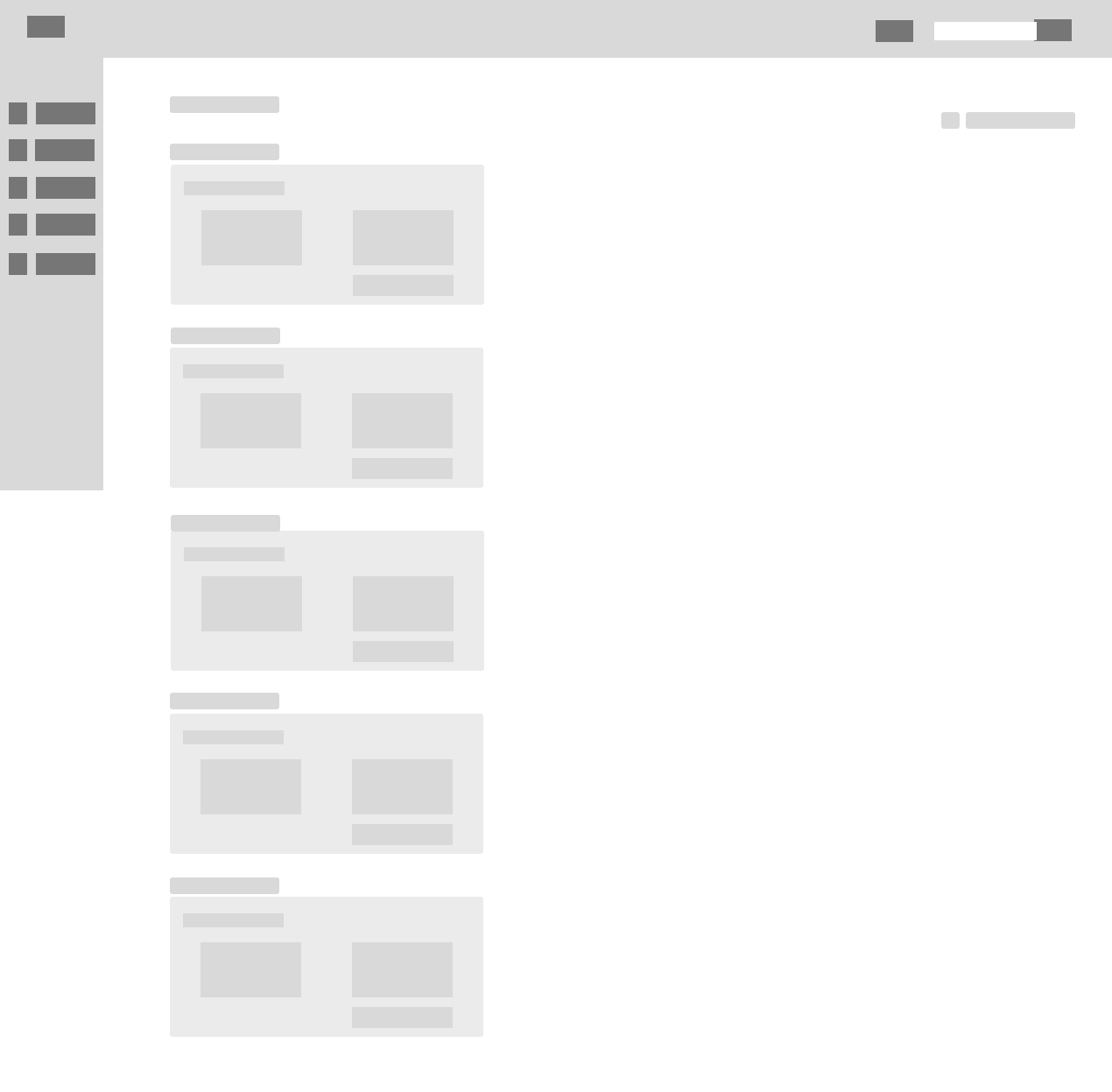
Allows customers to request maintenance services using a structured workflow, moving from broad wireframe flows into a polished step-by-step request interface.
Low-fi prototype


High-fi prototype


03
Invoice Dashboard
Provides visibility into invoices and financial documentation without relying on email communication.


Validation & Testing
Usability Testing
Conducted usability tests with stakeholders to validate navigation, information architecture, and feature discoverability. The findings were translated directly into design changes.
Feedback
Users struggled to locate invoices
Design change
Moved Invoices into main navigation
Feedback
Aircraft selection felt overwhelming
Design change
Added search and filtering
Feedback
Contact details were difficult to find
Design change
Added a dedicated Contact Information page
Business Impact
✓ Reduced dependency on email communication
✓ Improved transparency for customers
✓ Centralized information into one platform
✓ Reduced administrative workload for AMMs
User Impact
✓ Increased awareness of environmental conditions
✓ Created a more emotional relationship with renewable energy
✓ Encouraged reflection on natural rhythms and sustainability
✓ Turned invisible energy systems into everyday experiences